Skip to content
 Poor indoor air quality in offices and shared working spaces directly affects your employees’ health, working comfort and their overall work performance. Prolonged exposure to poor air in offices can cause health issues and result in increased sick leaves for employees. Airborne pollutants can cause headaches, allergies, fatigue, respiratory discomfort, unpleasant odors, reduced focus, and increased sick days. Poor quality breathing air in offices is a serious issue, especially for people with breathing problems and asthma. Dust particles, airborne pollutants, volatile organic compounds (VOCs), mold spores and poor ventilation systems are the main reasons for unhealthy office environments. Premium quality air purifiers for offices help you reduce these harmful contaminants from your indoor air in your offices and maintain a healthy breathing environment. There are also other factors and strategies that help you reduce indoor air pollution in offices.
Improve your office ventilation, as it is one of the most effective methods to improve your indoor air quality. Proper airflow helps fresh outdoor air circulate in your office and removes the polluted air. Poor ventilation systems in offices trap indoor air pollutants, carbon dioxide, odors, dust, and airborne contaminants that make your indoor air quality poor. Airborne pollutants and carbon dioxide levels quickly increase in crowded office places such as conference rooms, shared workspaces, kitchens, and enclosed office areas. It is important to make sure that HVAc systems in offices function properly for fresh airflow in the building. Offices or shared workspaces that have operable windows can also open their windows in suitable weather and allow fresh air to circulate in the offices.
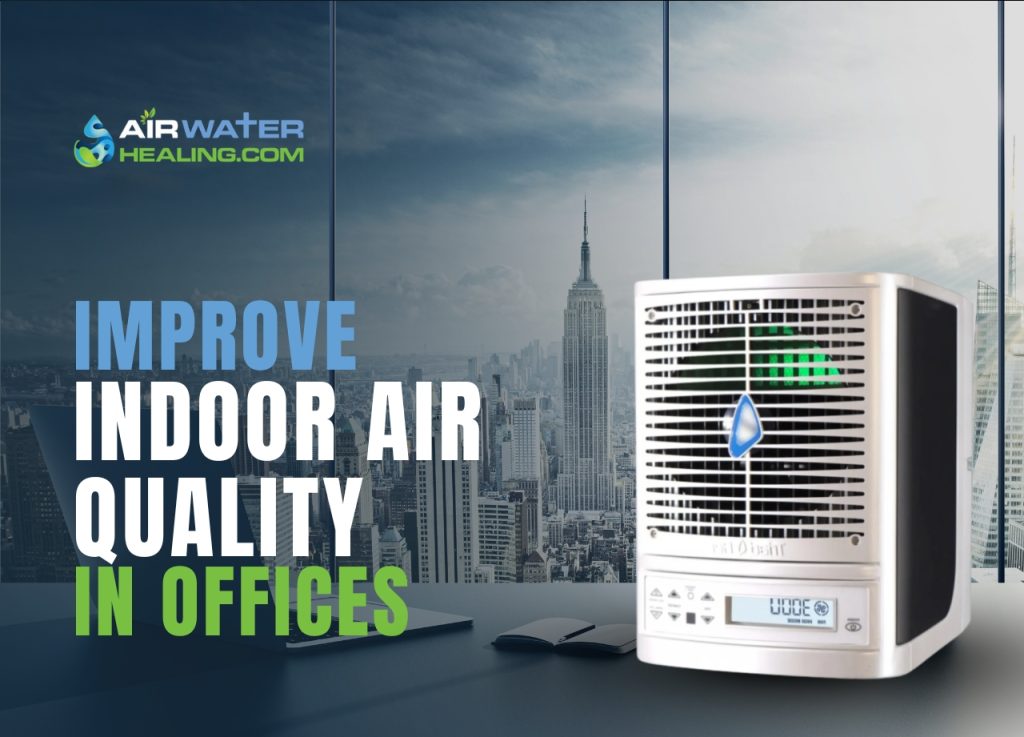
The next generation air purifiers use multiple air purification technologies that efficiently capture and eliminate air pollutants, bacteria, odors and mold spores. These powerful air purifiers reduce allergens, dust particles, odors, smoke particles, bacteria, and certain pollutants from indoor office air. These commercial-grade air purification systems are a necessity for offices with high employee density, limited ventilation, nearby traffic pollution, and employees who have asthma or breathing issues. The next-generation air purifiers use activated carbon filters, UV technology, and negative ionization to capture dust, remove odors, reduce airborne pollutants, and improve overall indoor air quality. It is important to select the right air purifier for your office spaces because different models of air purifiers have specific air filtration capacity and maintenance needs.
It is one of the key factors to maintain a stable indoor environment in offices because a functional HVAC system regulates indoor temperatures and controls humidity levels. Heating, ventilation, and air conditioning systems consistently circulate air inside your office buildings. If you do not service your HVAC systems on time, vents get dirty and may spread dust, mold, pollen, bacteria, and contaminants. These are the main HVAC system maintenance requirements.
Office managers or the responsible person should change the air filters as per the manufacturer’s recommendations and instructions. Dirty air filters reduce airflow, which allows pollutants and airborne contaminants to circulate and spread inside your office building. Offices that are on busy roads or near construction sites may need to change their air filters more frequently than other office buildings. High-efficiency air filtration systems are beneficial for offices that have poor ventilation systems, a large number of employees, visitors and industrial working environments.
Regular cleaning of your office is important to prevent dust accumulation and maintain a hygienic working environment. Dust buildup on desks, floors, electronic equipment, and ventilation surfaces is one of the most common factors of poor indoor air quality. Office carpets, furniture, shelves, keyboards, storage rooms, paper files, vents, and electronic equipment often accumulate dust over time, and it is essential to clean them on a regular basis.
It is critical to maintain normal humidity levels inside offices because lower or higher humidity levels cause employee discomfort and productivity levels. Lower humidity levels cause dry skin, throat irritation, and respiratory discomfort. High humidity levels can lead to bacterial growth and mold infestation on your property and cause structural and material damage. Professional humidity control systems, dehumidifiers, proper ventilation, and water leak fix help you maintain normal humidity levels in your offices. Proper humidity control steps help you stabilize the indoor air environment in kitchens, storage rooms, restrooms and office cabins.
Certain plants contribute to enhanced indoor air quality in offices, such as snake plants, spider plants, peace lilies, areca palms, aloe vera, rubber plants, and Boston ferns. These plants create a healthy and safe indoor breathing environment in offices when you place them strategically. These plants also enhance your overall workplace wellbeing and make your office environment fresher and more inviting. But it is also important to maintain them to avoid pest infestations, mold growth in soil, and decaying leaves.

Offices that have a large number of employees and visitors often experience high carbon dioxide levels. High carbon dioxide levels may lead to fatigue, drowsiness, distorted focus and discomfort in employees. Maintain fresh airflow in meeting rooms, shared workspaces, and enclosed office spaces with functional ventilation systems. Office staff can also use smart indoor air quality monitors to identify ventilation issues and get real-time indoor air quality insights.
Schedule professional indoor air quality inspections from time to time and identify all the hidden poor air quality issues. Indoor air quality testers use advanced equipment to identify mold growth, moisture sources, humidity issues, poor ventilation and air pollutants. Professional air quality inspectors use specialized testing tools to analyze particulate levels, airflow performance, humidity balance, and contamination sources. They provide you with a detailed report on all the issues and offer expert guidance on how you can make your indoor air quality safe.
Most modern workplaces have poor indoor air quality issues due to poor ventilation and enclosed workspaces. Office equipment emissions, VOCs, indoor moisture, mold growth, outdoor pollution, inefficient cleaning and sanitization are also key factors of contaminated indoor air quality.
The normal humidity level for indoor workspaces is between 40% to 60%.
It is important to maintain safe and healthy indoor air quality in offices and shared workspaces. There are many practices that help reduce airborne pollutants in the indoor environment, but investing in a high-tech air purifier is one of the best ways to create a safe indoor breathing zone. Regular cleaning, proper airflow, plants, sanitization, dehumidification and air purifiers are the best ways to improve indoor air quality in commercial offices.