Skip to content
What Is an Air Purifier Ionizer? How It Works and When to Use It?
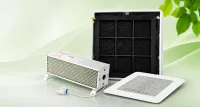
Ionizer is a feature of air purifiers in which electrically charged ions are charged to help remove particulars from the air. According to the model, the ions attach to airborne particles and settle on surrounding surfaces or be captured inside the purifier. Some ionizers generate ozone as a byproduct, review the manual to check the emissions and if the ionizer can be turned off while the purifier is working.
What is the purpose of the ionizer button on an air purifier?
Electronic components that generate ions are activated through Ion, Anion, and Ionizer. If the purifier includes a mechanical filter, check if it can keep filtering when the ionizer switch is turned off. Different brands use different names for their features, since it is advised to check the manual to confirm about the exact function.
Function of ionizer:
Difference between ionizer and PCO, HEPA, and other technologies
A single purifier may feature different technologies. To identify the function of your purifier, you must check which gasses or odors are addressed by the unit and which component handles airborne particles.
Technology | How it works | What to see |
Ionizer | Charges airborne particles by releasing ions. Depending on the model, the particles may settle on the surfaces or collected by the purifier filter. | If the model has ozone emissions testing and if it can be switched off while the purifier works. |
Activated carbon | Captures some gases and odor-producing compounds. | The amount of carbon and if replacement filters are accessible. |
HEPA filter | Airborne particles are captured when air moves through the filter. | The CADR of the purifier according to your room size and the price of replacement filters. |
Electrostatic precipitator | Charge’s particles and catches them on collection plates. | The cleaning routine of plates and if the model produces ozone. |
Photocatalytic oxidation (PCO) | Light activates a catalyst that reacts with airborne gases. | Check for pollutant reduction and emissions testing, as improper reactions may produce unwanted byproducts. |
Check particle CADR for pet dander, pollen, or smoke particles. It will determine the estimated time of particle removal from the air. If you want to turn the ionizer off, check if the model includes the particular setting. Look for a gas-removal stage for odors, such as an activated carbon filter.
Do air purifier ionizers generate ozone?
Some purifier ionizers produce ozone, yet emissions differ by model. Ozone is released into the room that may irritate lungs. According to the EPA, air purifiers that produce ozone deliberately should be avoided in occupied areas.
You may check your chosen air purifier on the certified air cleaner list of CARB. The certification considers electrical safety and ozone emissions.
Should I keep the ionizer off or on?
If the model’s ozone emissions are not verified and your purifier already has effective mechanical filtration, it is advised to turn the ionizer off. Check if the filter and fan are still in function. If you want to turn on ionization mode, check ozone emissions data for your model and if the feature is helpful to improve particle removal in your selected mode.
FAQs
Does an ionizer help with dust?
An ionizer charges airborne particles to remove them from the air. If the purifier lacks a particle collector, the particles may settle on surfaces including walls, floors, and other materials. For dust removal, a purifier with effective particle filtration should be used along with surface cleaning.
Does an ionizer remove musty odors?
Ionization is intended for particle removal. A purifier may reduce odors if it also includes activated carbon technology or gas-removal stage. For constant odors, find the source such as leaks, mold, or damp surfaces and correct it.
Can I use an ionizer purifier in a bedroom overnight?
If the purifier has mechanical filtration technology, you should turn the ionizer off and use the fan and filter overnight. If the ionizer always remains active, you must check the ozone emissions of your model before using it for several hours in your room.
What is the difference between bipolar ionization and negative ionization?
A bipolar ionizer generates both negative and positive ions, while a negative ionizer only releases negatively charged ions.
Can I use a purifier with a dehumidifier or humidifier?
According to the purifier’s operating limits, you may run them together. Keep the mist away from the purifier’s outlet or intake and place it away from the purifier’s drain hose or tank. The ionizer doesn’t work on humidity control. You may use a hygrometer to identify if your room needs a humidifier or a dehumidifier.