Skip to content
An air purifier and a humidifier can be used together in the same room. The humidifier maintains humidity levels when the air is too dry, while the air purifier removes certain airborne pollutants. If the room has excess humidity levels, you can also use a dehumidifier and an air purifier in the same room. Whatever you want to use, always check the purifier’s operating instructions and check humidity levels through hygrometers to identify whether you need a humidifier or a dehumidifier.
Difference among humidifier, dehumidifier, and an air purifier
Device | Purpose | When to use it |
Air purifier | Removes airborne particles and certain gases | When air quality is reduced due to pet dander, fine dust, airborne pollen, or smoke particles |
Humidifier | Increases moisture in air | If indoor humidity is low and the air feels dry |
Dehumidifier | Reduces moisture level in the air | When humidity levels are high and the air feel moist |
According to the EPA, an ideal range of indoor humidity is around 30% to 50% for moisture control. If the levels are between this range, you may only use an air purifier to maintain the air quality. In cold weather, condensation may increase the humidity levels in a room. You may use a humidifier on a lower setting to dry the moisture accumulated on the glass or walls.
Can you use PCO, HEPA, and other air purifiers with a humidifier?
A lot of air purifiers can be used with a humidifier in the same room, particularly the models featuring several purification technologies. You must check the humidity range of your model and instructions for placement. Keep the moisture away from the purifier’s sensors, air intake, or electrical parts. The results of an air purifier’s function depend on the technologies included.
Purification technology | How it works | What to look for |
HEPA filtration | Air passes through a dense filter and air borne particles are captured | For fine dust, smoke particles, dander, and pollen. Look for (CADR) suitable according to your room size |
Photocatalytic oxidation (PCO) | Light is used to activate a catalyst with particular gaseous pollutants | Performance depends on the model. Incomplete reactions can produce unwanted byproducts, so look for independent testing for both emissions and pollutant reaction |
Activated carbon | Absorbs odor-causing compounds and some gases | Performance is based on the amount of carbon and the gas. Many units pair carbon with a separate particle filter |
Ionization | Releases ions that charge airborne particles. Charged particles can accumulate inside the unit or settle on the surface based on the design | Check if the unit has a separate particle filter or collection stage and if ozone is produced from the ionizing feature |
Electrostatic precipitation | Electrically charges airborne particles and captures them on oppositely charged plates | Check the model’s ozone emissions and follow the cleaning schedule for the collection plates |
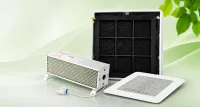
A purifier can combine HEPA with activated carbon, or PCO with an electrostatic collection stage. While comparing different models with different technologies, look at the function of each stage and what the unit has been tested to reduce. If you are concerned about pollen, smoke particles, and dust, look for measured particle removal. According to the EPA, avoid air cleaners that produce ozone indoors as ozone is excess harmful for lungs.
How to run a humidifier and an air purifier in the same room?
Place a hygrometer away from the windows, heating vents, and mist. Do not use a humidifier, as the humidity levels are between the normal range. If the humidity levels are low, turn on the humidifier while placing it at a significant distance from the air purifier. Read the instructions in each manual. It is better to place them on different sides of the room to get proper airflow.
A recommended starting setting is around 40% for a dry room. Reduce the setting if you notice damp furniture, foggy windows, bedding, or curtains. Do not let the humidity level exceed 50%.
In ultrasonic humidifiers, distilled water is particularly used as it removes white dust and reduces mineral deposit. According to the EPA, it should be emptied, wipe dried, and refilled daily and cleaned every 3 days. Check the manual to know the cleaning and rinsing steps.
Why does the red color indicate after switching off the humidifier?
Tiny water droplets are released from an ultrasonic humidifier that some purifiers refer to as particles. If in auto mode, the air quality indicator may turn red and the fan may speed up if the mist reaches the sensor. Tap water can also cause white dust on the surfaces and mineral particles in the air.
Turn the humidifier off briefly to troubleshoot and see whether the reading settles. Place the humidifier away from the purifier and redirect the mist. Turn it on again at a lower setting. Mineral dust is reduced through distilled water. If the sensor again reacts to water droplets, mist direction and placement should be changed.
Can you run an air purifier and a dehumidifier at the same time?
Yes, if the purifier meets the manufacturer’s operating conditions, air purifiers can and dehumidifiers can run at the same time. This combination is suitable for laundry rooms or damp attics where you want to reduce airborne particles and reduce humidity. The dehumidifier will reduce the humidity level. The air purifier will capture airborne particles and mold spores. These both units will make indoor air quality good with adequate moisture levels.
Measuring the humidity levels are important. The hygrometer should be placed away from the dehumidifier. If the room is damp, a reasonable starting setting is around 50%.
Keep the purifier clear of the drain line and tank. Check manual for instructions and position the purifier away from the drainage leaks or spills.
If the moisture is recurrent or musty odors are present, it needs proper investigation. It can be caused by constant condensation, water intrusion, or plumbing leaks. Moisture source correction is essential if mold is present. The dehumidifier will control humidity levels, while the purifier will filter airborne particles.
To simplify, if your bathroom measures 65% humidity and has an ongoing dust issue, a purifier will address airborne dust while the dehumidifier will control the humidity. If humidity levels are not getting normal, assessment of moisture source is recommended.
FAQs
Can I run a dehumidifier and an air purifier together?
Yes, you can run both units at the same time. Both devices are intended for different purposes. A dehumidifier reduces excess moisture from the air, while an air purifier cleanses the air by capturing airborne particles and mold spores.
Can I use a humidifier and an air purifier together overnight?
Yes, if your room is dry, you can run the humidifier with a humidity control setting and keep the mist away from the walls, bedding, and purifier. Check the humidity levels through a hygrometer in the morning. If you notice condensation, you should reduce the operating time or lower the setting the next night.
Does an air purifier control humidity?
A normal air purifier doesn’t change the overall moisture levels of a room. If you notice constant high humidity, measure it through a hygrometer. A purifier is used to remove airborne particles and some gases.
Should I buy a 2-in-1 air purifier and humidifier or buy separate devices?
A 2-in-1 unit is good to save space. However, we highly recommend using separate devices as they totally serve a different purpose. Separate units provide more flexibility to place them away from each other and use each device for its own job.